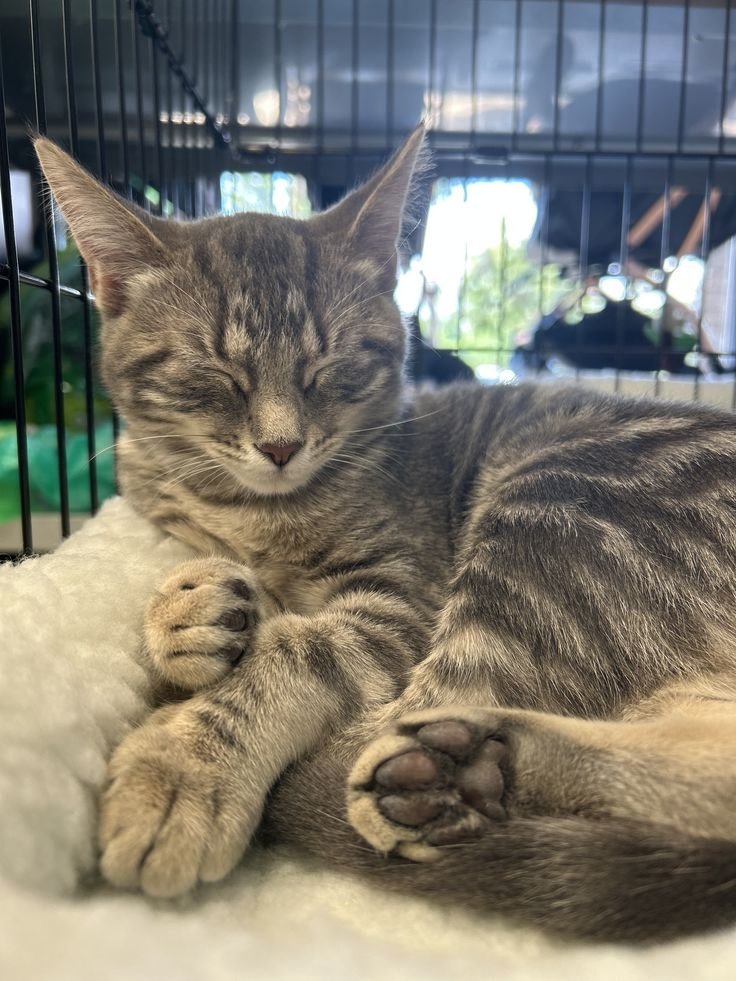
Nadia works three twelve-hour overnight shifts a week in an emergency department in Lubbock. She had been told, repeatedly and by well-meaning people, that her schedule made her a bad candidate for a pet.
Smokey disagreed.
The problem with "good homes"
Shift workers, students, people in small apartments, people without fenced yards — shelters have historically been very good at telling these people no. We have spent years unlearning that. The question was never whether someone's life looks conventional. It is whether a specific animal will thrive in it.
Smokey came to us as a five-year-old owner surrender, described in his intake notes as "aloof" and "not a lap cat." What that actually meant, we eventually worked out, is that he found busy daytime households exhausting and preferred the quiet hours.
We stopped asking adopters to prove they were perfect and started asking what their actual day looks like. Smokey didn't need a normal home. He needed a quiet one at 3am, and that is a very findable thing. — Maria Delgado, Executive Director
Nadia met Smokey on a video call during a break between shifts. She watched him stalk a toy across the cat lounge, asked our staff about his litter habits and his tolerance for closed doors, and came in to meet him on her next day off. He went home with her the following Saturday.
A schedule of their own
Within a month of going home, Smokey had rebuilt his entire routine around Nadia's. He sleeps while she is at the hospital. He is waiting on the back of the sofa when she comes through the door at 7:30am. They share breakfast at eight — her dinner, his breakfast — and then they both sleep until mid-afternoon.
On her nights off, he wakes her at 3am anyway. She says this is fair.
The "not a lap cat" note in his file turned out to be badly wrong. He is on her lap most of the time she is sitting down. He simply required the room to be quiet, dark, and entirely his idea.